Most business owners have never seen what actually happens between the moment they sign off on a quote and the moment a folder of logo files lands in their inbox. That gap creates anxiety, awkward feedback, and the classic question: “why does a logo take four weeks and cost what it costs?”
This article pulls the curtain back. Below is the real logo design process we follow at Cantonax, stage by stage, including how long each phase realistically takes, what you are expected to do, and what you receive at the end. No mystique, no agency jargon.
What is the logo design process, in one paragraph?
The logo design process is a structured sequence of research, exploration, refinement and production steps that turns a business brief into a complete, usable identity asset. A professional process typically runs 4 to 8 weeks and moves through eight stages: discovery, research, strategy, sketching, digital concepts, presentation and feedback, refinement, and final file handoff. The design work itself is only about half of it. The rest is thinking, testing and preparing files so the logo survives contact with the real world.
The 8 stages at a glance
| Stage | Typical duration | Who does the work |
|---|---|---|
| 1. Discovery and brief | 2 to 5 days | Client + designer |
| 2. Research and audit | 3 to 5 days | Designer |
| 3. Strategy and direction | 2 to 3 days | Designer (client sign-off) |
| 4. Sketching | 3 to 7 days | Designer |
| 5. Digital concepts | 5 to 10 days | Designer |
| 6. Presentation and feedback | 3 to 7 days | Client + designer |
| 7. Refinement rounds | 5 to 10 days | Designer |
| 8. Final files and guidelines | 3 to 5 days | Designer |
Total: roughly 4 to 8 weeks for a standard small business identity. Multi-stakeholder companies and projects involving trademark checks sit at the longer end.
Stage 1: Discovery and the brief
Everything starts with questions, not pencils. A logo that looks beautiful but says the wrong thing is a failed logo, so the first job is to understand the business well enough to make judgement calls later.
The questions we actually ask
- What does your company sell, and who buys it most often?
- Who are your three closest competitors, and how do you want to be different from them?
- If your brand were a person at a dinner party, how would they speak?
- Where will this logo appear most: a storefront sign, an app icon, invoices, vehicle wraps, packaging?
- Are there any colours, symbols or styles that are off limits for cultural, legal or personal reasons?
- Do you have an existing logo, and what specifically stopped working about it?
- What does success look like 12 months after launch?
Your part: answer honestly and quickly. A vague brief is the single biggest cause of delays and disappointing concepts. If you have an internal team, gather their input before the kickoff call, not after the first presentation.
Deliverable of this stage
A written creative brief, one or two pages, that both sides approve. It lists the objectives, audience, tone words, applications and constraints. Nothing moves forward until this is signed off.
Stage 2: Research and competitive audit
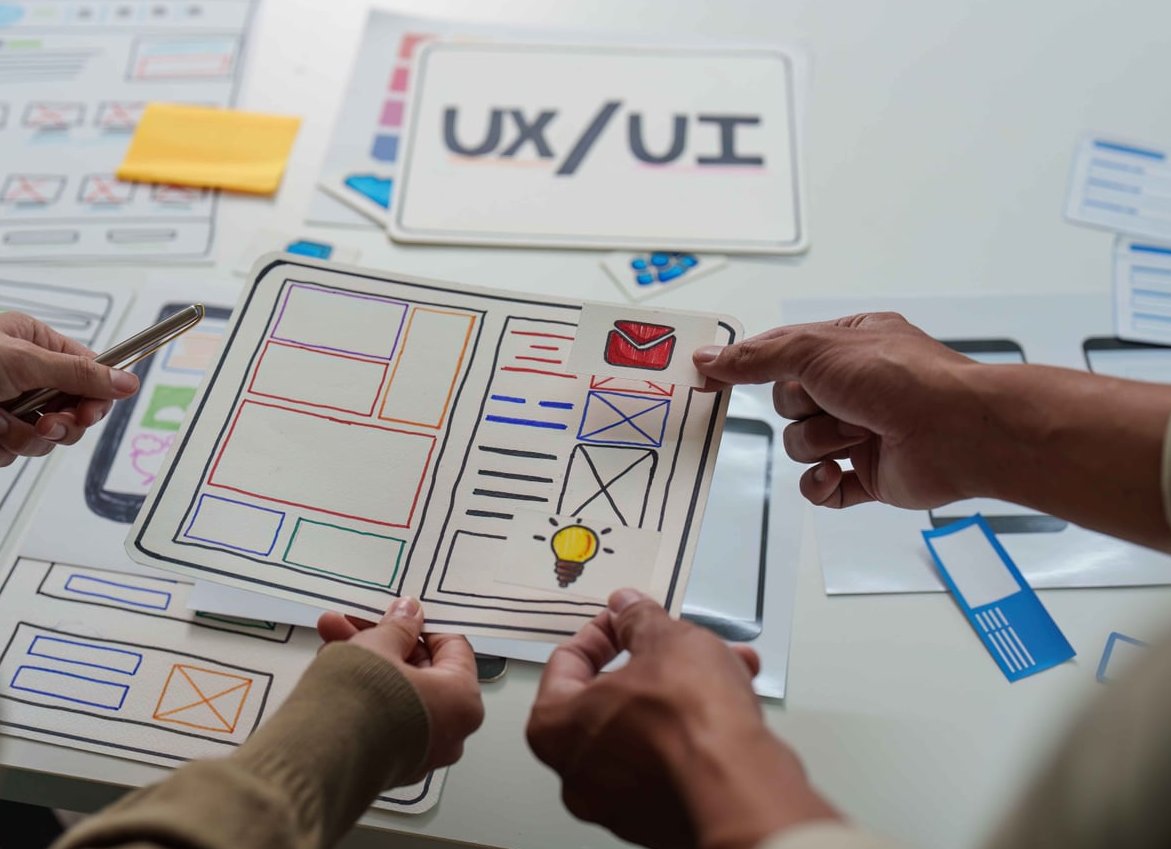
This is the invisible work that clients rarely see and often underestimate. The designer maps the visual territory of your market: what shapes, colours and typographic styles your competitors already own, which clichés are saturated (the generic swoosh, the house outline for real estate, the leaf for anything “eco”), and where there is white space.
Research usually includes:
- A visual audit of 10 to 20 direct and adjacent competitors
- Colour mapping to find an ownable palette rather than a crowded one
- A look at the market category conventions you need to respect so customers still recognise what you do
- A preliminary trademark search to avoid obvious conflicts
- Mood boards that establish visual territory before any logo exists
Why it matters: most “I don’t like it” reactions trace back to an unexamined assumption. Research turns taste debates into strategy conversations.
Stage 3: Strategy and creative direction
Here the brief and the research are distilled into two or three distinct creative directions. A direction is not a logo. It is a sentence plus a mood board, for example: “Engineering-grade precision: geometric, monochrome, a mark built from the letterform itself.”
Agreeing on directions before design work starts is the biggest time-saver in the entire logo design process. It means the first presentation is a refinement conversation instead of a reset.
Stage 4: Sketching
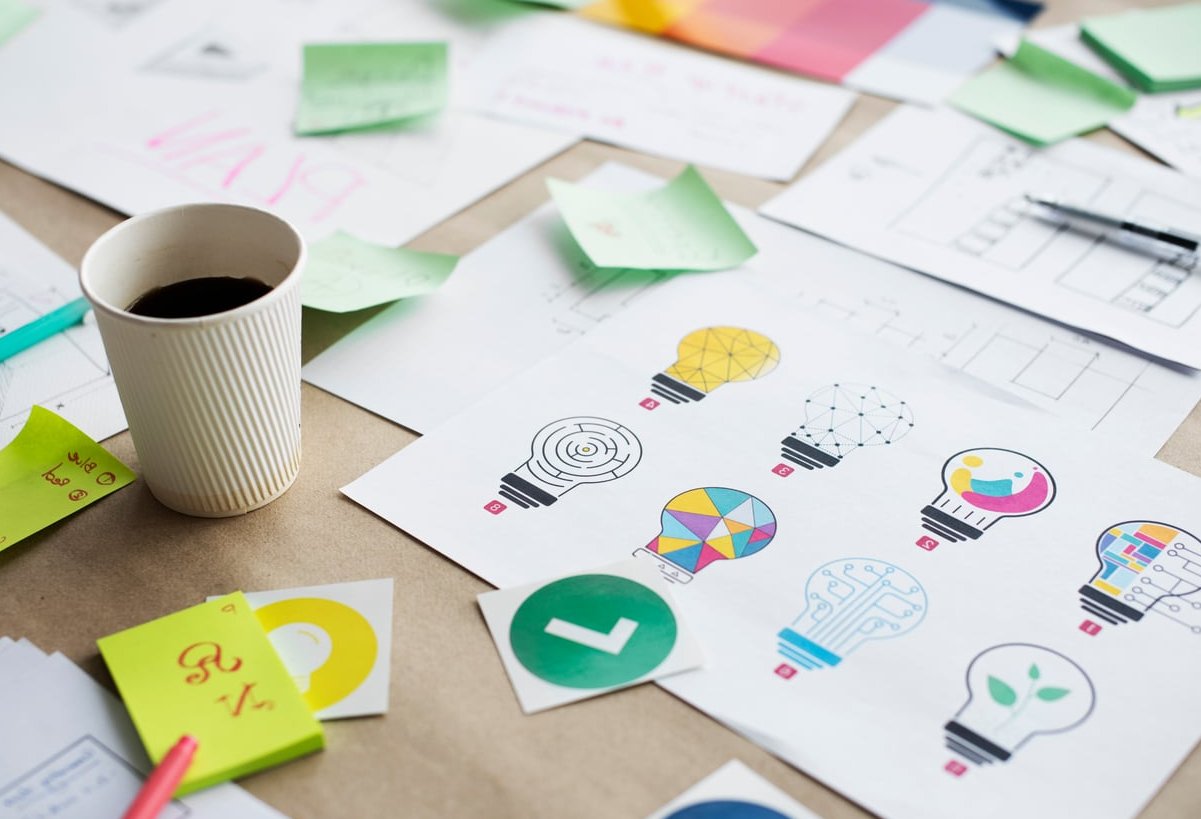
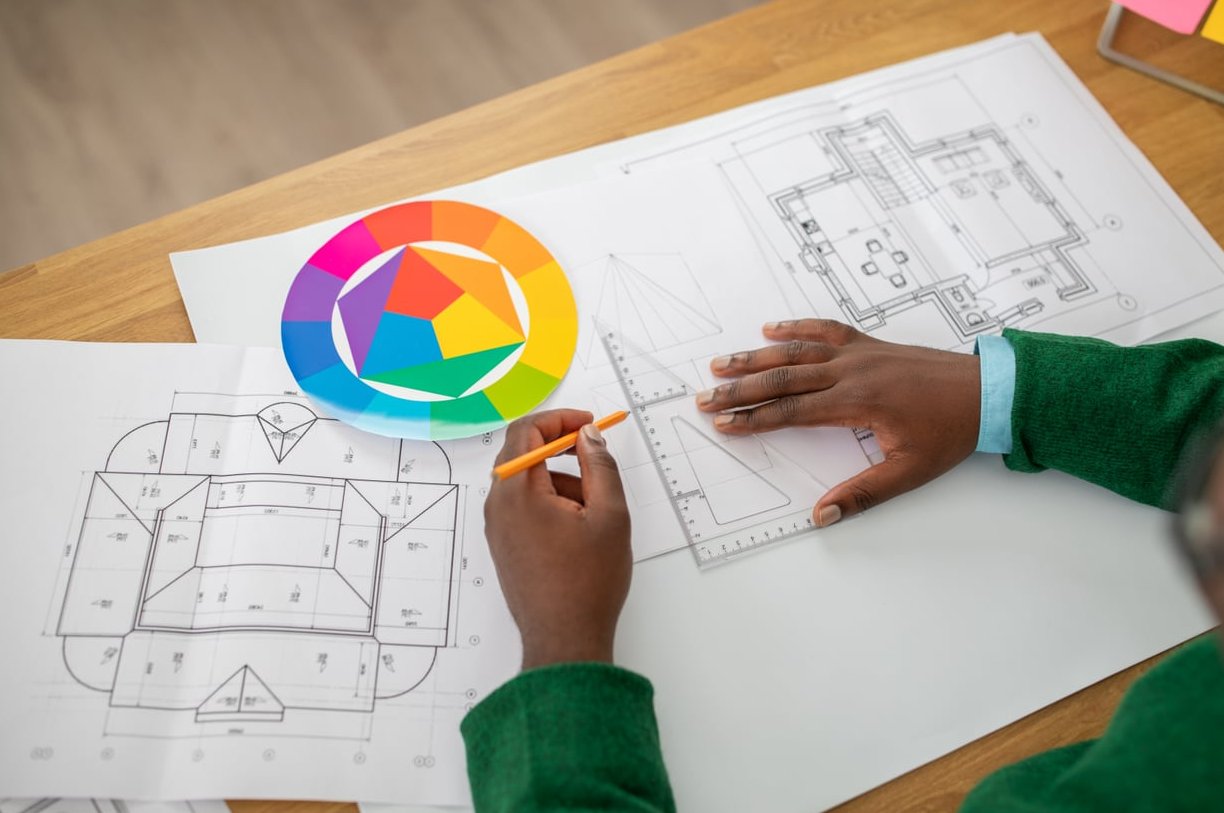
Yes, on paper. Sketching is fast, disposable and brutally honest about whether an idea has a strong silhouette. A designer may fill several pages with 50 to 150 thumbnails, of which perhaps six are worth developing.
What is being tested at this stage:
- Silhouette strength: is the shape recognisable at 16 pixels?
- Idea clarity: does the concept communicate something, or is it decoration?
- Construction logic: can it be built with clean geometry rather than fudged curves?
- Flexibility: does it work horizontally, stacked, and as a standalone icon?
Clients do not usually see the sketch pages, and that is deliberate. Rough pencil marks are easy to misread and often kill good concepts prematurely. Some studios do share a curated selection as part of the story, which is a nice touch of transparency.
Stage 5: Digital concepts
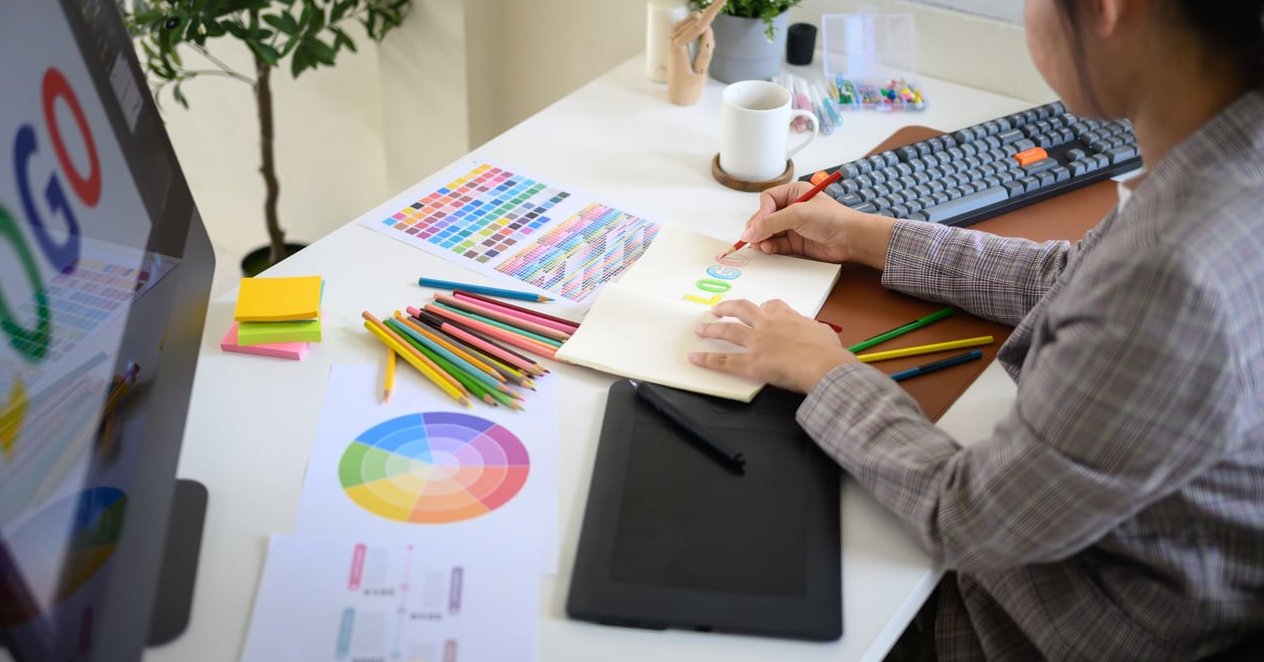
The strongest sketches move into vector software. This is where the painstaking part happens: grid construction, optical corrections, kerning, curve tension, weight balancing. A mark that looks “simple” often takes 20 or more hours of micro-adjustment.
What gets built for each concept
- Primary lockup (icon plus wordmark)
- Secondary or stacked lockup
- Standalone icon or monogram
- Black, white and single-colour versions
- Small-size legibility test
- One or two realistic mockups: signage, app icon, business card, packaging
How many concepts should you receive? At Cantonax we present two or three fully developed routes, not twelve half-finished ones. Volume is a tactic used to disguise a thin strategy. Three strong, defensible options give you a real choice without decision paralysis.
Stage 6: Presentation and client feedback
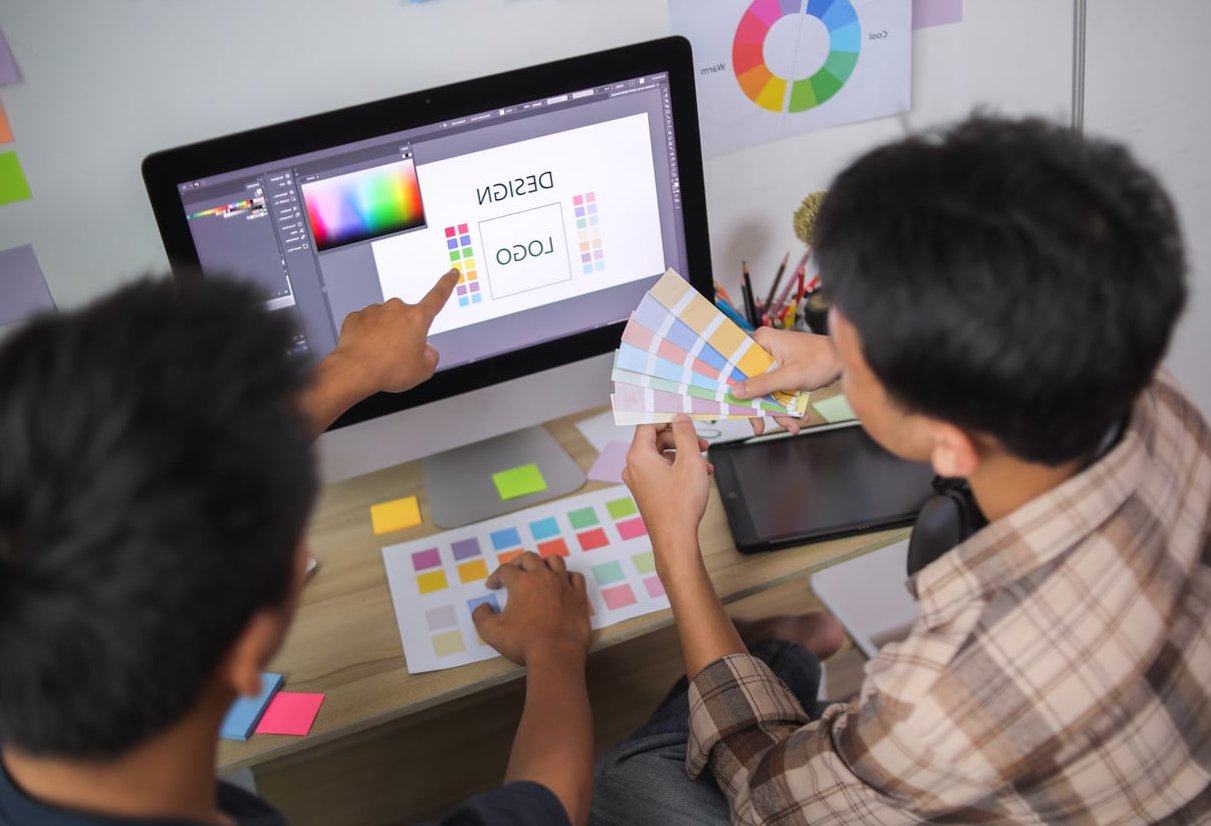
A good presentation explains the why before showing the what. Each concept is tied back to the brief: this is the audience it targets, this is the tone it projects, this is how it behaves on your storefront and in a 32 pixel browser tab.
How to give feedback that speeds things up
| Instead of saying | Say this |
|---|---|
| “I don’t like the blue” | “The blue feels corporate, we want to look more approachable to families” |
| “Can you make it pop?” | “On the van wrap it reads weakly from 20 metres, can we increase contrast?” |
| “My wife prefers option 2” | “Option 2 better matches the tone words we agreed: confident and warm” |
| “Show me more options” | “Route A is closest. Can we explore it with a lighter typeface?” |
Consolidate feedback into one document, from one decision maker. Feedback arriving in five separate emails from four people over two weeks is what turns a six-week project into a four-month one.
Stage 7: Refinement rounds
One direction is selected and refined. Most contracts include two to three revision rounds, and each round should narrow the focus rather than reopen the whole question.
- Round 1: structural changes. Proportions, icon detail, typeface choice, lockup arrangement.
- Round 2: colour variants, spacing, final typographic tuning.
- Round 3: polish only. Hairline adjustments, final approval.
Real-world testing happens here too: printing the logo at actual size, viewing it at thumbnail scale, checking it in greyscale, embroidering or engraving tests if the brand uses uniforms or physical products, and accessibility checks on colour contrast.
If a project is still restarting at round three, it almost always means stage one or three was rushed.
Stage 8: Final files, guidelines and handoff
This is the stage that separates a logo you own from a JPEG you are stuck with. A proper handoff package should include every format you will realistically need for the next five years.
What should be in your final folder
| File type | Use case |
|---|---|
| AI or EPS (vector source) | Master file, printers, signage makers, future edits |
| SVG | Websites, apps, infinite scaling, small file size |
| PNG (transparent, multiple sizes) | Social profiles, slides, documents, email signatures |
| JPG | Third-party platforms that reject transparency |
| PDF (vector) | Sending to any supplier without software issues |
| Favicon / ICO set | Browser tabs, app icons, bookmarks |
Each of those should exist in full colour, one-colour black, one-colour white (reversed), and in every approved lockup.
The mini brand guidelines
Even a lightweight guidelines document should cover:
- Clear space and minimum size rules
- Approved lockups and when to use each
- Colour values in HEX, RGB, CMYK and Pantone
- Typography pairings for headings and body text
- Misuse examples: do not stretch, do not recolour, do not add shadows, do not place on busy photos
- Background and contrast rules
Finally, confirm the transfer of ownership and intellectual property rights in writing. If a contract does not explicitly transfer copyright to you on final payment, you do not fully own your logo. Ask the question before you start, not after.
Why a logo takes 4 to 8 weeks and not 48 hours
You can get a logo in 48 hours. What you get is a shape made without research, without testing, often adapted from a stock template that three other businesses in your region also bought. The cost shows up later, in reprinted signage, a redesign two years in, and a brand that nobody remembers.
The time in a professional logo design process goes into:
- Understanding the business well enough to make strategic design decisions
- Ensuring the mark is distinctive in your actual competitive set
- Building it with technical precision so it scales from a favicon to a building
- Testing it in the environments where it will live
- Producing files and rules so your team and suppliers use it correctly

Red flags when hiring a logo designer
- No discovery questions before work begins
- Unlimited concepts and unlimited revisions promised upfront
- Only JPG or PNG files delivered, no vector source
- No written agreement on copyright transfer
- A portfolio of mockups with no explanation of the thinking behind them
- Pressure to approve the first concept immediately
How to prepare so your project stays on schedule
- Appoint one decision maker with authority to approve.
- Gather internal opinions before kickoff, not after presentation.
- Collect references of logos you admire, inside and outside your industry, with a note on why.
- List every application the logo must handle: uniforms, vehicles, packaging, app icon, embroidery.
- Agree on feedback deadlines in the schedule, typically 48 to 72 hours per round.
- Keep a shared document for all feedback so nothing is lost in email threads.
FAQ about the logo design process
How long should a logo take to design?
A professionally run logo project takes 4 to 8 weeks from brief to final files. Simple wordmarks for solo businesses can be completed in 2 to 3 weeks. Projects involving multiple stakeholders, naming work, or formal trademark clearance commonly run 8 to 12 weeks. Delays are far more often caused by slow client feedback than by slow design work.
What are the 7 steps of the design process?
The classic version is: define the problem, research and gather information, brainstorm ideas, develop concepts, select and refine a solution, test and get feedback, then implement and deliver. Our 8-stage logo design process follows the same logic but splits research and strategy into separate steps, because that is where branding projects usually succeed or fail.
What are the 7 elements of a good logo design?
A strong logo is generally:
- Simple enough to be drawn from memory
- Memorable after a single exposure
- Timeless rather than tied to a passing trend
- Versatile across print, screen, embroidery and signage
- Appropriate to the industry and audience
- Distinctive within its competitive landscape
- Legible at both very small and very large sizes
What are 5 rules for creating a good logo design?
- Design in black and white first, add colour only once the shape works
- Test at the smallest size you will ever use, typically a 16 pixel favicon
- Avoid gradients, fine detail and literal clichés that date quickly
- Build with vectors and clean geometry, never raster images
- Make sure the idea survives when the trend that inspired it disappears
How many logo concepts should a designer present?
Two or three fully developed concepts is the sweet spot. Each should be a genuinely different strategic direction rather than a cosmetic variation, and each should come with an explanation of the reasoning plus realistic mockups.
Do I own the logo after the project is finished?
You should, but only if the contract says so. Ownership typically transfers on final payment. Ask specifically about copyright transfer, source file delivery, and whether the designer retains portfolio rights.
What is the difference between a logo and a brand identity?
A logo is a single identifying mark. A brand identity is the wider system: colour palette, typography, imagery style, iconography, layout rules and tone of voice. The logo design process described here is the foundation. Most businesses add a basic identity system either at the same time or shortly after.
Can I skip the sketching stage to save money?
You can, but it rarely saves anything. Sketching is the cheapest and fastest way to kill weak ideas. Skipping it moves that filtering process into expensive digital revision rounds instead.
Ready to start your own logo project?
Knowing the logo design process means you can evaluate any proposal you receive, ask sharper questions, and give feedback that actually moves the work forward. If you are planning a new identity or a rebrand, get in touch with the Cantonax team and we will walk you through the brief, the schedule and the deliverables before you commit to anything.