
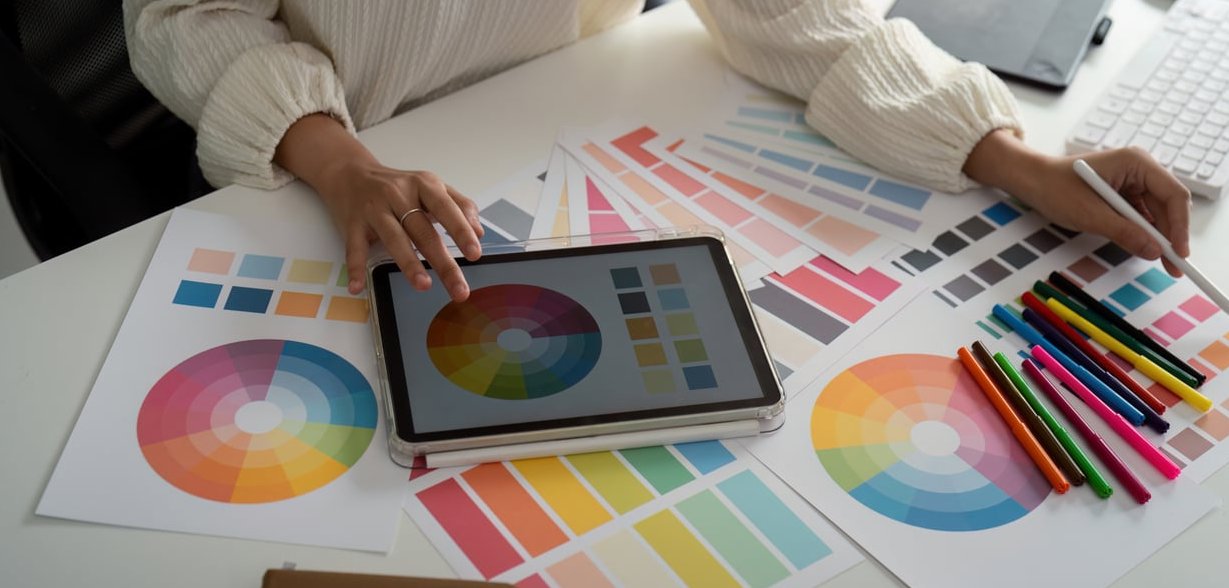
Color is the silent salesperson of your brand. Before a customer reads a tagline, compares features, or even processes your logo, they have already formed an opinion based on the colors you chose. That reaction happens in less than 90 seconds, and up to 90% of it is driven by color alone.
This guide goes beyond generic color charts. We’ll break down what each color actually communicates, show real brand examples across multiple industries, and give you a framework to choose your palette with intention rather than personal taste.
What Is Color Psychology in Branding?
Color psychology in branding is the study of how specific hues, tones, and shades influence consumer perception, emotion, and purchasing behavior. It blends neuroscience, cultural conditioning, and marketing strategy to help brands trigger the right feeling at the right moment.
When done well, color builds three things at once:
- Recognition (Coca-Cola red, Tiffany blue, Cadbury purple)
- Emotional association (trust, excitement, calm, luxury)
- Differentiation from competitors in a crowded market

Why Color Choice Is a Strategic Decision, Not an Aesthetic One
Most founders and marketing teams pick colors based on what they personally like. That’s a costly mistake. Research consistently shows that color increases brand recognition by up to 80% and directly affects conversion rates on websites, packaging, and ads.
The smarter approach is to ask three questions before choosing any color:
- What emotion do I want my customer to feel in the first 5 seconds?
- What is the dominant color my direct competitors already own?
- Does my color match the price point and positioning of my product?
What Each Color Says About Your Business
Red: Energy, Urgency, Appetite
Red raises heart rate and creates a sense of urgency. It’s the color of action, passion, and hunger, which is why it dominates fast food and clearance sales.
- Food & Beverage: Coca-Cola, KFC, McDonald’s (paired with yellow)
- Entertainment: Netflix, YouTube
- Retail: Target, H&M
Use red when: you want impulse buys, bold positioning, or to stand out as a challenger brand.
Blue: Trust, Stability, Professionalism
Blue is the most universally liked color and the safest choice for industries where customers need to feel secure. It lowers heart rate and signals competence.
- Finance: PayPal, Visa, American Express, Chase
- Tech: Meta, LinkedIn, Twitter/X (legacy), IBM
- Healthcare: Pfizer, Oral-B
Use blue when: you sell software, financial services, B2B solutions, or anything that requires customer trust before purchase.
Yellow: Optimism, Warmth, Attention
Yellow is the most visible color in daylight, which is why it’s used on warning signs and taxis. In branding, it conveys friendliness and youthful energy.
- Retail: IKEA, Best Buy
- Food: McDonald’s, Lay’s
- Delivery: DHL, Hertz
Use yellow with caution: too much yellow can cause eye strain and feel cheap. Pair it with a darker anchor color.
Green: Health, Growth, Sustainability
Green has split into two distinct meanings: nature/wellness on one side, and money/growth on the other. Both work, but you must commit to one direction.
- Wellness & Nature: Whole Foods, Animal Planet, Tropicana
- Finance & Growth: Spotify, Cash App, John Deere
- Eco & Sustainability: Starbucks, The Body Shop
Orange: Confidence, Affordability, Playfulness
Orange combines red’s energy with yellow’s friendliness. It feels accessible, fun, and slightly disruptive without being aggressive.
- E-commerce: Amazon (accent), Etsy
- Telecom: Orange, Boost Mobile
- Hardware: Home Depot, Harley-Davidson
Purple: Luxury, Creativity, Wisdom
Historically the color of royalty (because purple dye was rare and expensive), purple still carries premium associations today, but also signals imagination and innovation.
- Luxury & Beauty: Cadbury, Hallmark
- Tech & Streaming: Twitch, Yahoo
- Finance: Roku, FedEx (paired with orange)
Black: Sophistication, Power, Premium
Black is the shortcut to luxury positioning. It works because it removes distraction and lets the product or typography do the talking.
- Luxury: Chanel, Prada, Rolex
- Tech: Apple, Sony, Tesla
- Fashion: Nike, Adidas (frequent use)
White: Simplicity, Purity, Space
White is rarely the dominant brand color but is the most powerful supporting color. It signals minimalism, cleanliness, and modernity.
- Tech: Apple (negative space), Tesla
- Beauty: Glossier, Aesop
- Healthcare: most hospital and pharma brands
Pink: Femininity, Modernity, Disruption
Pink has evolved. Once exclusively tied to femininity, modern brands like Glossier and T-Mobile have repositioned it as bold, contemporary, and gender-inclusive.
- Beauty: Glossier, Victoria’s Secret
- Telecom: T-Mobile
- Hospitality: Barbie (cinematic branding), Lyft (early branding)
Brown: Reliability, Earthiness, Heritage
Brown is underused in modern branding, which is exactly why it can differentiate. It signals craftsmanship, heritage, and warmth.
- Logistics: UPS
- Food: Hershey’s, M&M’s
- Coffee & Artisan: Nespresso, countless craft roasters

Quick Reference: Brand Color Psychology Chart
| Color | Primary Emotion | Best Industries | Avoid If |
|---|---|---|---|
| Red | Urgency, passion | Food, retail, entertainment | You sell calm or wellness |
| Blue | Trust, stability | Finance, tech, healthcare | You want to feel disruptive |
| Yellow | Optimism, attention | Retail, food, delivery | You target premium buyers |
| Green | Health, growth | Wellness, finance, eco | Your category is oversaturated with green |
| Orange | Confidence, fun | E-commerce, telecom, hardware | You sell luxury |
| Purple | Luxury, creativity | Beauty, streaming, premium | You sell to traditional B2B buyers |
| Black | Power, sophistication | Luxury, fashion, tech | Your brand is playful or for kids |
| Pink | Modernity, warmth | Beauty, lifestyle, telecom | You sell to conservative B2B |
| Brown | Heritage, reliability | Logistics, food, artisan | You sell innovation or tech |
How to Apply Color Psychology to Your Brand (Practical Framework)
Knowing what colors mean is only half the battle. Here’s how to actually build a palette that works:
- Audit your competitors. Map their dominant colors on a grid. If 7 out of 10 use blue, going blue means you’ll blend in.
- Define one primary emotion. Not three. Just one. Trust? Energy? Luxury? Pick the lane.
- Apply the 60-30-10 rule. 60% dominant color, 30% secondary, 10% accent for calls to action.
- Test contrast and accessibility. Your palette must pass WCAG contrast standards or you’ll lose readers.
- Test in context. A color that looks beautiful in a logo can fail on packaging, mobile screens, or printed materials.

Cultural Context Matters
Color meaning is not universal. White symbolizes purity in Western markets but mourning in parts of Asia. Red is luck and prosperity in China but danger in many Western contexts. If you’re building a global brand, validate your palette in every key market before launch.
Common Color Branding Mistakes to Avoid
- Picking colors based on personal taste instead of customer perception
- Copying the category leader instead of differentiating
- Using too many colors (3 to 4 is the sweet spot for most brands)
- Ignoring digital rendering (colors look different on screens vs print)
- Skipping accessibility tests for colorblind users (8% of men have some form of color vision deficiency)
FAQ: Color Psychology in Branding
What is the 60-30-10 rule in branding colors?
It’s a design principle where 60% of your visual space uses your dominant color, 30% uses a secondary color, and 10% uses an accent color (typically reserved for calls to action and important highlights).
What color builds the most trust?
Blue consistently tests as the most trustworthy color across cultures, which is why it dominates banking, healthcare, and tech. However, trust also depends on context: green can feel equally trustworthy in wellness or finance.
Can a brand change its color and survive?
Yes, but carefully. Mastercard, Instagram, and Airbnb have all evolved their color systems successfully. The key is gradual transition and keeping the emotional core intact.
How many colors should a brand have?
Most strong brands use 1 to 2 primary colors and 2 to 3 supporting colors. More than that dilutes recognition.
Is color psychology backed by science?
Partially. While some color responses are biological (red raises heart rate, blue is calming), much of color meaning is learned through cultural and marketing exposure. The combination of both makes it powerful for branding.
Final Thoughts
Color is not decoration. It’s the fastest way to communicate who you are, who you serve, and what you stand for. The brands that win don’t just pick pretty colors, they pick intentional ones that align emotion, audience, and positioning.
Before you finalize your next brand palette, ask yourself: If a customer saw only my colors and nothing else, what would they assume about my business? If the answer doesn’t match your strategy, it’s time to redesign.