
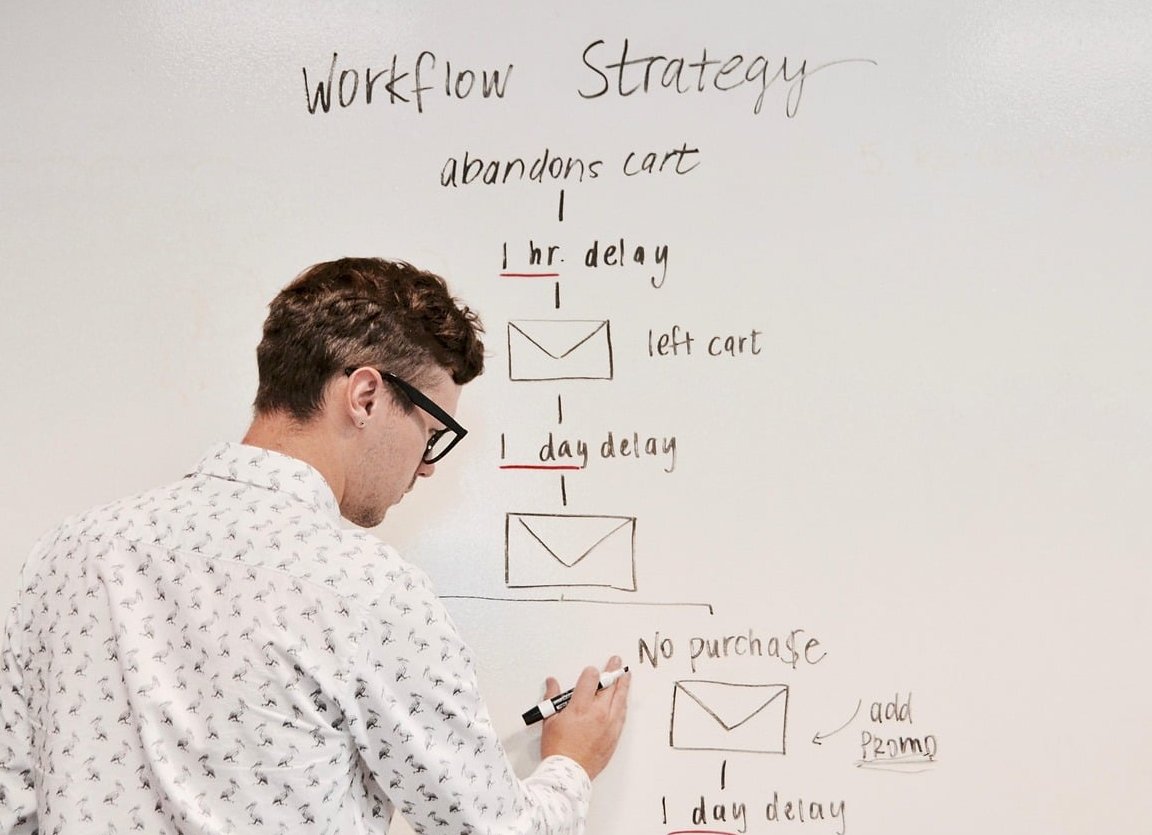
If you run a small business, you have probably heard the term customer journey map thrown around in marketing meetings, podcasts, or LinkedIn posts. But what does it actually mean, and more importantly, what does one look like once it is built? This guide answers both questions in plain language, with two concrete examples (one B2C, one B2B) and a step-by-step method you can apply this week.
What Is a Customer Journey Map?
A customer journey map is a visual representation of every interaction a customer has with your brand, from the moment they first hear about you to long after the purchase. It combines storytelling and visualization to help you see your business through your customer’s eyes.
Think of it as a timeline that shows:
- The stages a customer goes through
- The touchpoints where they interact with your brand (website, email, store, sales rep, support)
- The actions they take at each step
- Their thoughts, emotions, and pain points
- The opportunities for your business to improve their experience
Unlike a sales funnel, which focuses on what the company wants (a conversion), a journey map focuses on what the customer experiences. That shift in perspective is exactly why it is so powerful for small businesses.
Why Small Business Owners Should Care
You do not need a giant marketing department to benefit from journey mapping. In fact, smaller teams often gain the most because:
- You can spot friction points (slow replies, confusing checkout, unclear pricing) that quietly cost you sales
- You align your team around one shared view of the customer
- You stop guessing where to invest your limited time and budget
- You uncover missed opportunities for upsells, referrals, or content
The 5 Key Stages of a Customer Journey Map
Most journey maps follow a five-stage structure. You can adapt the wording to fit your industry, but the logic stays the same.
| Stage | What the customer is doing | Your goal |
|---|---|---|
| 1. Awareness | Realizing they have a problem or need | Be visible and helpful |
| 2. Consideration | Researching and comparing options | Build trust and clarity |
| 3. Decision (Purchase) | Choosing and buying | Remove friction |
| 4. Retention | Using the product or service | Deliver value and support |
| 5. Advocacy | Recommending or repurchasing | Turn customers into promoters |
What Goes Inside a Journey Map?
For each stage, you typically document the following layers:
- Persona: who is this customer? (age, role, goals)
- Customer actions: what they do at this stage
- Touchpoints: where the interaction happens
- Thoughts and emotions: what they feel and ask themselves
- Pain points: where things break down
- Opportunities: what your business can improve or add

Example 1: B2C Customer Journey Map (Online Coffee Subscription)
Let us imagine Sarah, a 32-year-old remote worker who drinks coffee every morning and wants better quality beans delivered to her door.
| Stage | Actions | Touchpoints | Emotions | Opportunity |
|---|---|---|---|---|
| Awareness | Sees Instagram reel about specialty coffee | Instagram, blog articles | Curious | Run educational short-form content |
| Consideration | Compares 3 subscription brands | Website, reviews, YouTube | Overwhelmed | Add a clear comparison page and FAQ |
| Decision | Picks a starter plan | Checkout page | Hopeful, slightly anxious | Offer a first-bag guarantee |
| Retention | Receives bag, brews coffee | Packaging, email, app | Excited or disappointed | Send brewing tips video on day 1 |
| Advocacy | Shares photo, refers a friend | Social, referral program | Proud | Reward referrals with free bag |
Example 2: B2B Customer Journey Map (SaaS for Accounting Firms)
Now let us look at Marc, the operations manager at a 12-person accounting firm searching for a tool to automate client onboarding.
| Stage | Actions | Touchpoints | Pain points | Opportunity |
|---|---|---|---|---|
| Awareness | Googles “client onboarding software accounting” | Google, LinkedIn | Too many generic results | Publish niche-specific SEO content |
| Consideration | Books a demo, reads case studies | Website, sales call | Unclear pricing tiers | Show transparent pricing upfront |
| Decision | Validates with the partners, signs contract | Email, contract tool | Long internal approval | Provide a ROI one-pager for decision-makers |
| Retention | Onboards team, runs first workflows | Product, support, CSM | Setup feels complex | Assign a dedicated onboarding specialist |
| Advocacy | Speaks at industry webinar, refers peer firm | Events, referral program | No incentive to refer | Launch a partner program with revenue share |
How to Build Your First Customer Journey Map in 7 Steps
You do not need fancy software. A whiteboard, a spreadsheet, or a free tool like Miro or Canva will do.
- Define a clear objective. Are you trying to reduce churn, improve onboarding, or increase conversions? One map, one goal.
- Build a customer persona. Pick one realistic profile based on data, interviews, or sales notes.
- List the stages. Start with the five classic ones and adjust to your business reality.
- Identify every touchpoint. Ads, website pages, emails, calls, packaging, support tickets, social media.
- Capture actions, thoughts, and emotions. Use real customer quotes whenever possible.
- Highlight pain points and gaps. Where do customers drop off, complain, or get confused?
- Prioritize opportunities. Pick 2 or 3 quick wins to implement this quarter, then iterate.
Common Mistakes to Avoid
- Mapping what you wish happens instead of what really happens. Use data, not assumptions.
- Creating one map for all customers. Different personas need different maps.
- Treating it as a one-time project. Customer behavior shifts, your map should too. Review it at least once a year.
- Ignoring post-purchase stages. Retention and advocacy are where small businesses gain the most leverage.
Tools You Can Use in 2026
If you prefer digital tools to build and share your journey map, here are popular options for small teams:
- Miro and Mural for collaborative whiteboarding
- Canva for visually polished maps you can share with clients
- UXPressia and Smaply for dedicated journey mapping
- Figma if your team already uses it for design
- A simple Google Sheet when you just want to start fast
Key Takeaways
- A customer journey map is a visual story of how customers experience your brand across every stage.
- The five core stages are awareness, consideration, decision, retention, and advocacy.
- Each stage should capture actions, touchpoints, emotions, pain points, and opportunities.
- Small businesses gain the most when they map one persona, one goal, and act on quick wins.
Frequently Asked Questions
What are the 5 stages of a customer journey map?
The five common stages are awareness, consideration, decision, retention, and advocacy. Some businesses add a sixth stage for onboarding or service delivery depending on their model.
What is the difference between a customer journey map and a sales funnel?
A sales funnel is company-centric and tracks conversions toward a purchase. A customer journey map is customer-centric and includes thoughts, emotions, and post-purchase experiences.
Do I need software to create a customer journey map?
No. You can start with sticky notes, a whiteboard, or a spreadsheet. Software helps when you want to share, collaborate, or maintain multiple maps over time.
How often should I update my journey map?
At least once a year, and any time you launch a new product, channel, or persona. Customer behavior in 2026 changes fast, especially with AI-driven discovery and shopping habits.
Can AI help me build a customer journey map?
Yes. AI tools can analyze support tickets, reviews, and chat logs to surface pain points and emotional patterns far faster than manual review. They are a great starting point, but you still need human judgment to prioritize actions.
How long does it take to build one?
A first usable draft can be built in a half-day workshop. Refining it with real data, interviews, and analytics typically takes two to four weeks.
Ready to turn your customer experience into a competitive advantage? Start with one persona, one goal, and one quick win this week. Your future customers will thank you.